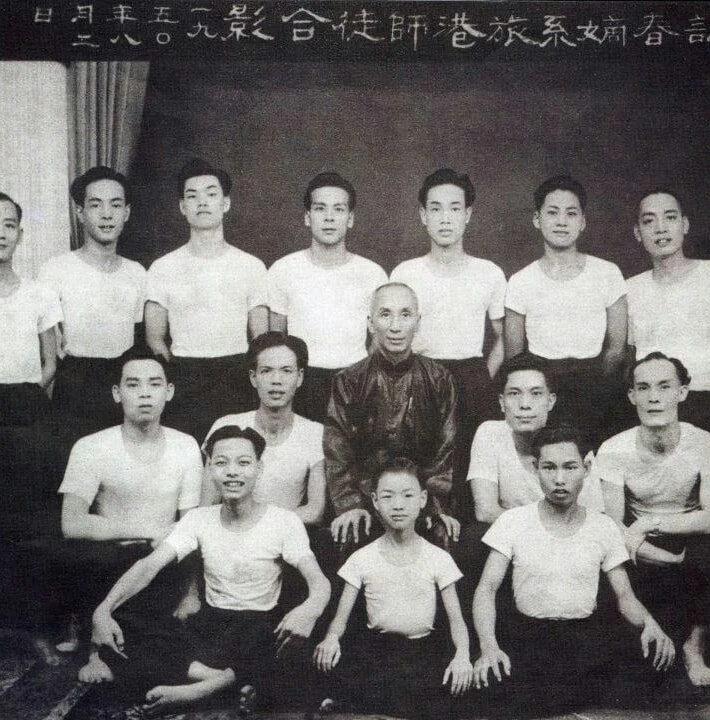
Lineage
Grandmaster Ip Man
葉繼問 师父
Sifu Duncan Leung
梁紹鸿 师父
A Legacy Stretching Back Centuries
as taught by
Grandmaster Ip Man
to SiFu Duncan Leung
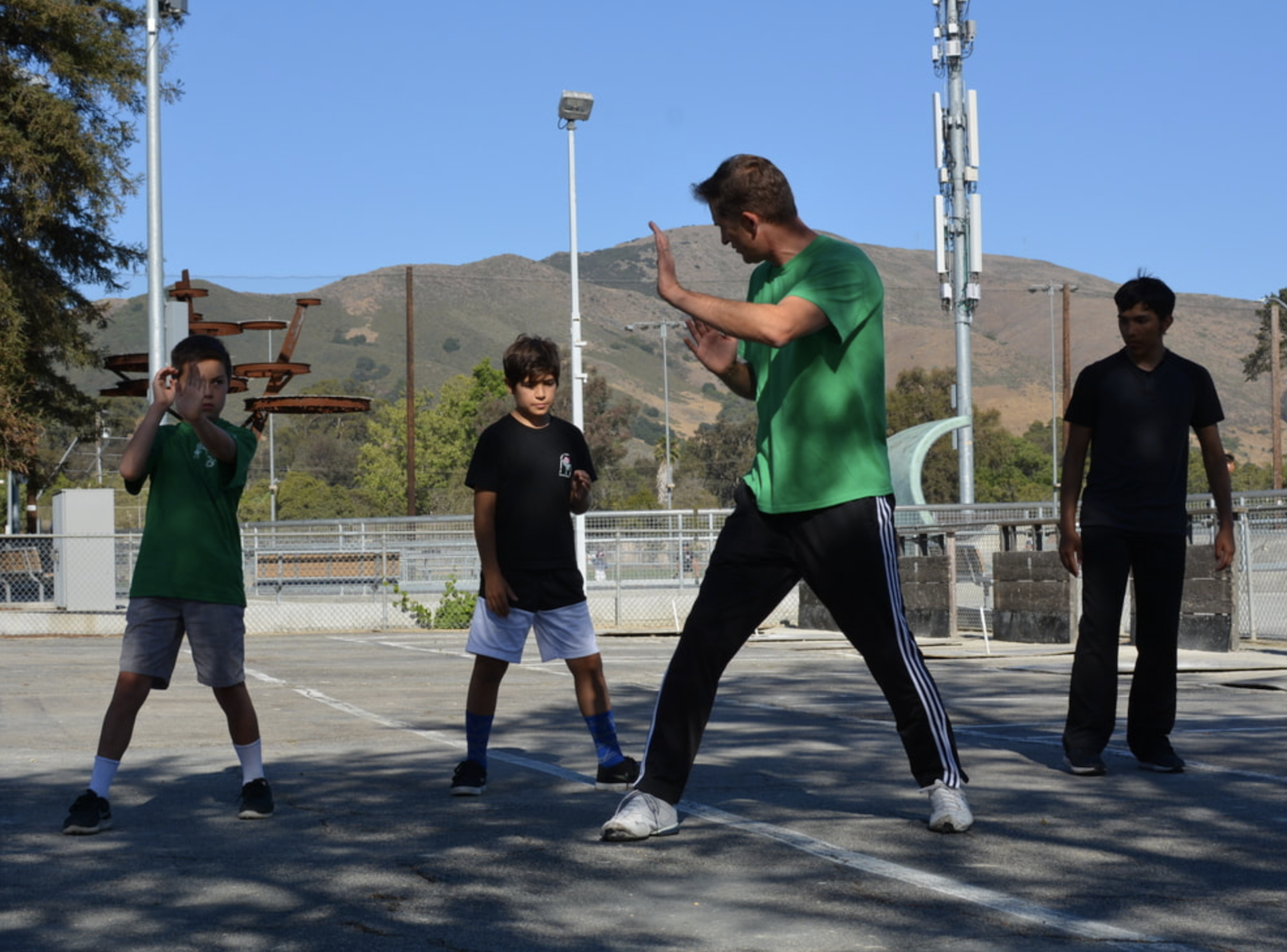
Dave Mathisen has trained in the Wing Chun lineage of SiFu Duncan Leung since 1992
He is a graduate of the US Military Academy at West Point and the US Army’s Ranger School
A gifted teacher, he was invited to serve as an Instructor at West Point while a Captain in the Army
He is devoted to teaching the Principles and Application of Wing Chun as accurately as possible, preserving the teachings of SiFu Ip Man and SiFu Duncan Leung
A Sophisticated Fighting Art of Southern China
Legendary Past:
Brutally Effective Today
In a violent assault, no one asks you “What is your Lineage?”
Real violence happens extremely fast and is brutal.
To survive and eliminate the threat, you must understand the real principles that work in a violent confrontation — proper application of which can enable you to dominate the situation, in a world of real force and real physics.
Wing Chun Kung Fu is built on real principles that work in real life — but only if those principles are passed down properly, and only if you are able to actually apply those principles when your life depends on it.
That’s the real reason why Lineage matters.
The human hand is quicker than the human eye.
Every time.
Humans are not cats.
No matter how many times you watch Return of the Dragon, you will still have human reflexes and not cat reflexes.
If you want to survive a real attack, you need a system that allows you to be one step ahead, without relying on visual reflexes — because you are not a cat, and real violence can be as deadly as a venomous snake, especially if the attacker is concealing a blade, which is one of the oldest weapons known to man and readily available to criminals world-wide.
You need a system that does not rely on being bigger, stronger, or faster than your opponent — and one that does not rely on you fighting just one opponent at a time.
So how do you defeat an attacker — or multiple attackers — even if you are not bigger, stronger, or faster than they are?
Internalize the CENTERLINE PRINCIPLE —> sadly, many get this WRONG
Internalize the principle of COVER rather than blocking —> sadly, many get this WRONG
Internalize, through practice, the purpose of the classic Wing Chun drill of CHI SAU —> sadly, many think Chi Sau is the same as fighting, which is also wrong
Understand TIMING and DISTANCE —> sadly, many get this WRONG, and it can only be learned through PRACTICE
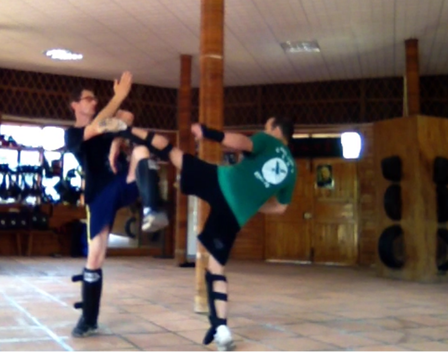
Understand the EIGHT WING CHUN KICKS —> sadly, many branches of Wing Chun do not practice the Eight Kicks
Train to increase POWER and SPEED using the Traditional SUPPORTING EXERCISES —> also called Power Training
Train to confront REAL VIOLENCE using confrontation-ending FORCE —> not a game, not a contest, REAL APPLIED MARTIAL ARTS
Applied Wing Chun Kung Fu
About Dave:
Why is Wing Chun important to me?
My interest in Kung Fu began with my first lunch-box, in first grade (1975). It was a “Kung Fu” lunchbox, based on the television show Kung Fu, with David Carrradine. I remember that it said something like “Kung Fu: Over 3,000 years old,” and had an image of Carradine on the front with no hair — I thought his name was “Kung Fu” and wondered if that was the way someone looked if they were over 3,000 years old.
I was intrigued. But not enough to actually start training (also, I was about six years of age).
My family suffered a catastrophic tragedy when my cousin was murdered at only fifteen years old by an attacker using a knife.
I was fourteen.
That is when I began taking Kenpo karate classes at a local dojo and reading every book I could find about martial arts. Of course, I studied all the films of Bruce Lee and knew that he had learned from Master Yip Man (now more commonly spelled in western alphabets as Ip Man). In fact, Bruce Lee had been born in the San Francisco Bay Area, where I was also born and grew up. I bought his book Chinese Gung Fu (published in 1963). Becoming a warrior was important to me, in order to learn how to protect myself and others. I applied for a nomination to the US Military Academy at West Point.
As a cadet at West Point, we were given mandatory training in boxing, wrestling, and a variety of self-defense classes. I also joined our company’s intramural boxing team. Later, at the US Army Ranger School, we learned and practiced lethal hand-to-hand combat techniques including sentry takedowns and fighting moves from the World War II era.
I became an active-duty Infantry officer and received an assignment to the 82nd Airborne Division. As soon as I arrived in Fort Bragg, I looked in the yellow pages under “martial arts” and saw a small advertisement with an image of Ip SiFu hitting the wooden man 木人桩 — which would begin my Wing Chun journey. I went down to the school the very next day.
I began training in the Wing Chun Kung Fu School of SiFu Brian Edwards on Tolar Street in Fayetteville, North Carolina in January, 1992. SiFu Edwards was a student of SiFu Duncan Leung in Virginia Beach during the early years.
During my entire time in the 82nd Airborne, I trained up to seven days a week when not in the field or on deployment, two and sometimes three hours a day, until my PCS (Permanent Change of Station) in June of 1995. Wing Chun became an important part of my life. It felt good knowing that I could handle myself in a violent situation, even in the roughest areas of the city.
I remained in the Army until 2003. Beginning in 2012, I have learned Applied Wing Chun from SiFu Duncan Leung at every opportunity that I could, including traveling to China to train with him and with his other students there at his school in Panyu.
I am eternally grateful to him for sharing this precious Chinese martial art with the world.
Why is Applied Wing Chun so important to me?
I HAVE COMPLETE CONFIDENCE IN WING CHUN PRINCIPLES AND TECHNIQUES, PROPERLY APPLIED, and that translates into confidence in any situation — which to me is so valuable that it is priceless.
I AM CONVINCED THAT SIFU DUNCAN LEUNG IS CONVEYING THE CORE UNDERSTANDING OF THE PRINCIPLES OF WING CHUN, taught to him by Ip Man SiFu, who learned them from Chan Wa Shun 陳華順 and Leung Bik Wo 梁璧和, who learned them from Leung Jan 梁贊 of FatSan (Fo Shan 佛山), who was the first “dry land” student to be taught Wing Chun by members of the Red Boat Opera 紅船. I am proud of this heritage — and to explore its depths of insight is a never-ending source of value in my own personal life.
I AM MORE IN BALANCE — AND A BETTER MAN IN ALL ASPECTS OF MY DAILY LIFE — BECAUSE OF THE EXAMPLE SET BY SIFU DUNCAN LEUNG, AS WELL AS HIS DESCRIPTIONS OF THE GENUINE CARING AND PERSONAL SELF-CONTROL OF HIS OWN SIFU, IP MAN. SiFu Leung gives the example of how Ip Man would hold one hand like a cup beneath the cigarette in his other hand when smoking, to catch ashes before they went on the floor or the ground where he was sitting — “He cared about other people, a lot,” Duncan says. Also, having known SiFu Duncan Leung now for over twelve years, I can personally attest to the fact that he conducts himself with exemplary integrity and dignity while treating others with kindness and respect (and enforcing proper boundaries), setting an example and a standard that I personally find highly worthy of emulation. Ultimately, if the martial arts are about protecting oneself and others, they should actually make us more caring, as well as more self-controlled — and even, more selfless.